ServicesWater Softeners
Water Softeners in West University Place
We test your water before we touch a softener. If the unit in your garage can be fixed, we fix it. If it is worn out, or your home does not need one at all, we tell you that too.
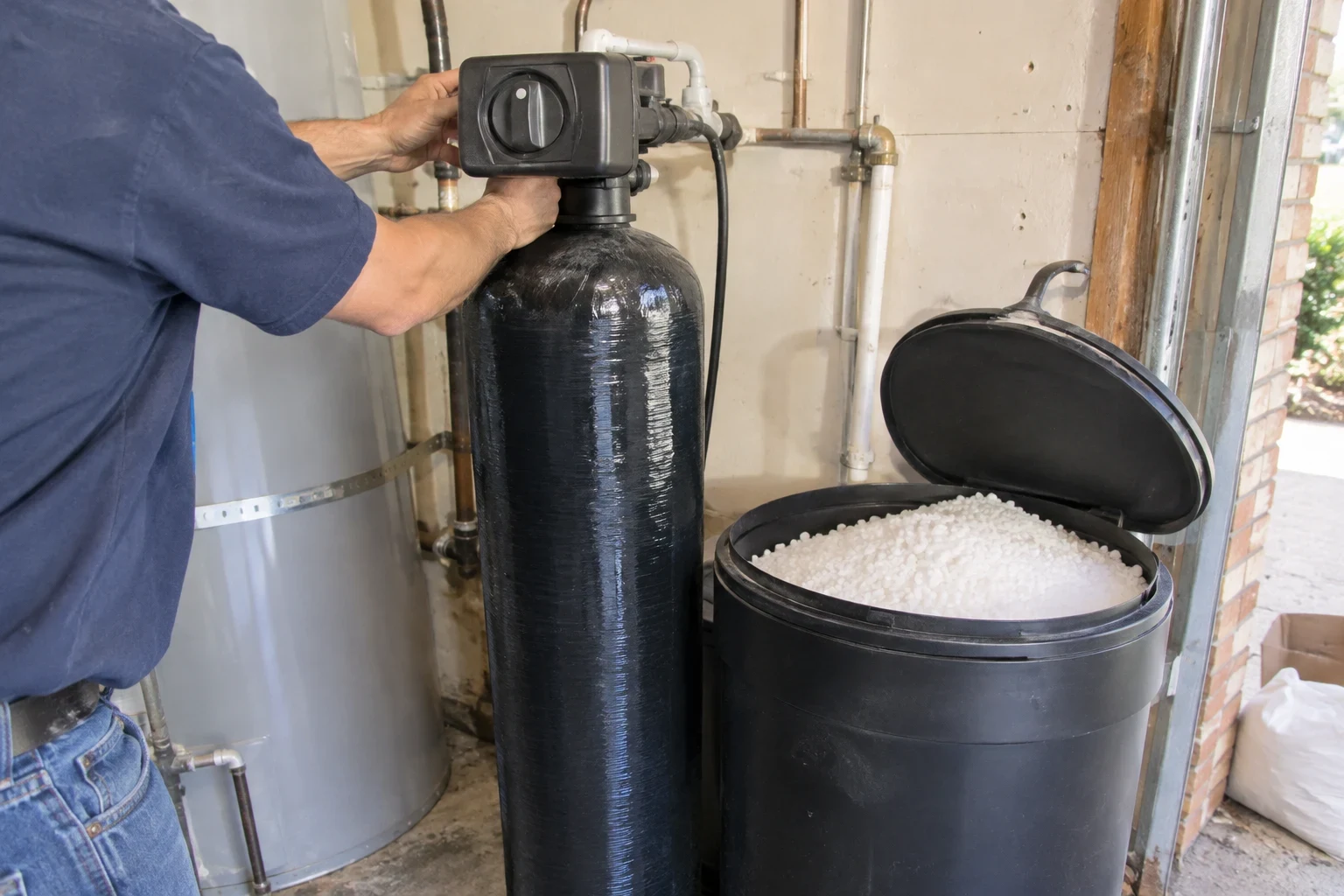
A softener only makes sense if your water calls for one
A water softener trades hardness minerals, mostly calcium and magnesium, for sodium or potassium as water runs through a tank of resin beads. Softer water leaves less scale in your water heater, on faucets and on glass shower doors. Soap lathers more easily too.
Not every home needs one. We start with a hardness test, so the decision rests on your numbers and not on a pitch. If the test shows your real complaint is chlorine taste or odor, whole-home filtration may be the better fit, and we will say so.
Plenty of our softener calls are about a unit that is already in the garage. Older softeners often need a cleaning, a new part or fresh resin rather than a whole new system. We check the control valve, the resin and the brine tank first, then tell you plainly whether to fix it or retire it.
What our softener work covers
Hardness test first
We test the water at your home and show you the reading. That number sets the system size and the regeneration settings, or tells us you do not need a softener at all.
Repair work on the unit you own
We break up salt bridges, clean clogged brine lines and injectors, swap worn seals and pistons in the control valve, and reset timers that drifted after a power outage. Many softeners have years left once the small parts are handled.
Fresh resin
Resin beads break down with age, and chlorine in city water wears them out faster. If the tank shell and control head check out, a fresh bed of resin can bring an older softener back to life for much less than a full new system.
New system installation
When replacement is the right move, we size the unit to your water use and hardness, plumb in a bypass valve and run the drain line correctly. New systems come with free installation.
Setup and walkthrough
We set the regeneration schedule and show you how to add salt and how to put the system in bypass. You will know where everything is before we leave.
Help after the install
We offer full services after the sale. If something needs adjusting later, you call the same people who did the work.
Signs your softener needs attention, or that you may need one
White crust on fixtures
Chalky buildup on faucets, showerheads and glass doors is scale. If you already have a softener, it is likely not regenerating the way it should.
Salt level never drops
When the salt in the brine tank stays at the same height for weeks, a hard crust called a salt bridge may have formed. Water cannot reach the salt, so the resin never recharges.
Standing water in the brine tank
A little water at the bottom is normal. A tank that stays half full usually points to a clogged injector, a blocked drain line or a valve problem.
Soap stops lathering
If showers and laundry feel different than they used to, the resin may be worn out or the settings may no longer match your water.
Salty taste at the tap
This often means the softener is not rinsing properly after it regenerates. It is usually a valve or setting issue and is often a simple fix.
Noisy water heater
A heater that pops or knocks while it warms up often has mineral sediment sitting on the bottom of the tank. Getting hardness under control slows that buildup down.
How a softener visit goes
- 1
The phone call
You tell us what you are seeing and whether you already have a softener. We ask a few questions and set a time to come out.
- 2
Test and inspect
We test your water hardness at the tap. If there is an existing unit, we open it up and check the valve, the resin, the brine tank and the drain line.
- 3
Your options, plainly
We explain what we found and what it will take. If a repair will do the job, that is what we recommend. If the unit is past saving, we tell you why and what we would put in its place.
- 4
Repair or install day
Most fixes are done in one visit. For a new system, we shut off the water, plumb it in, test for leaks, set it up and clean up before we go.
- 5
Follow-up
After the first few regeneration cycles, we can recheck hardness to make sure the settings are right for your home.
What moves the price
We do not give a number until we know your water and have seen your setup. A few things drive most of the cost. We go over each one with you so nothing comes as a surprise.
- Repair or replace
- Swapping a seal or clearing a salt bridge costs far less than a new system. New resin sits in between. This is the biggest factor, and it is why we inspect first.
- Your hardness reading and water use
- A higher reading, or a busy house running lots of showers and laundry, calls for a bigger resin tank. When the tank is sized right, it recharges less often and goes through less salt.
- Where the system goes
- If your home has an existing softener loop, a new unit hooks up quickly. If not, we may need to run pipe to the spot, add a drain connection or find power close by, and that takes more time.
- System type and options
- Metered valves, dual-tank units and potassium instead of salt all change the cost. We only suggest options your water and habits call for.
Water softener questions
Something not covered here? (713) 528-8226
Do I really need a water softener?
Not always. The answer comes from a hardness reading at your tap and from what is actually bugging you. We test before suggesting anything. A softener does nothing for taste or smell, so if that is the complaint, we point you to something that will help.
Can you fix a softener you did not install?
Yes. Most softeners use similar valves and resin tanks, and we work on many common brands. If parts are no longer available for yours, we will tell you before any work starts.
How often do I add salt?
It depends on your water use and the size of the unit. Most households check the brine tank once a month and top it off when it is about a quarter full. We will show you what to look for.
Will soft water taste salty?
A softener that is working right puts very little sodium in the water, and the taste is hard to notice for nearly everyone. Some people still prefer to skip it. In that case you can fill the brine tank with potassium, or add a reverse osmosis system at the kitchen sink for drinking and cooking.
Does a softener remove chlorine?
No. A softener handles hardness minerals. For chlorine taste and odor, whole-home filtration with carbon is the right tool, and the two can be installed together.
Is installation extra on a new softener?
New systems come with free installation. After we test your water and look at the spot, we walk you through the full quote by phone, so you know the whole picture up front.
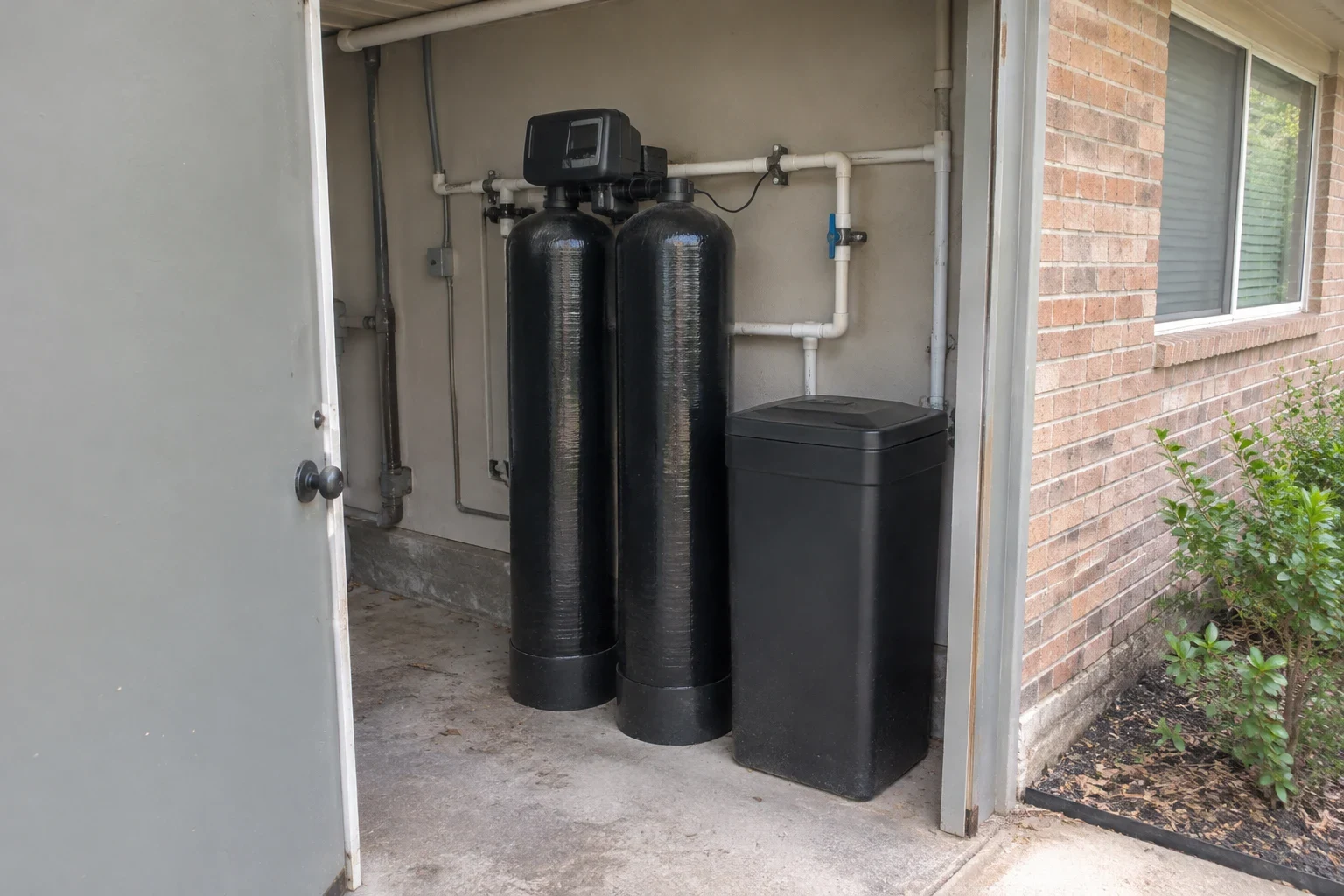
Find out if your softener can be saved
Tell us what you see on your fixtures and in the brine tank. We will set a time to test your water and look at your system, then give you a straight answer on repair or replacement.