ServicesReverse Osmosis
Reverse Osmosis Systems in West University Place
We install under-sink reverse osmosis for clean drinking and cooking water, and we fix the systems people already own. If new filters or a membrane will bring yours back, that is what we tell you. If it is worn out, we explain why.
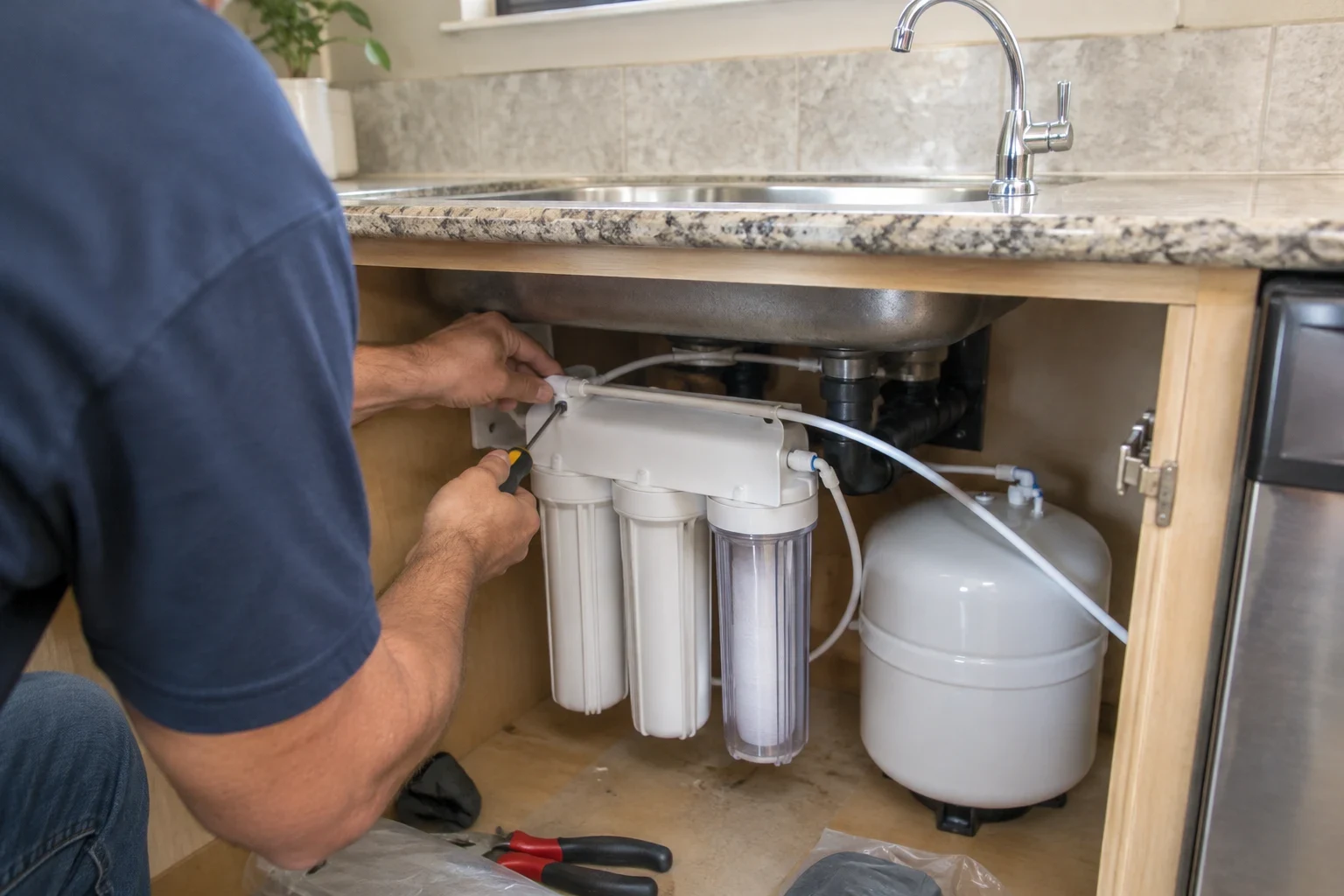
What reverse osmosis does at your kitchen sink
A reverse osmosis system lives in the cabinet under your sink. It forces water through a very fine membrane, with a sediment filter and a carbon filter up front to catch grit and chlorine. The treated water fills a small tank and runs to its own faucet. You get a clean-tasting supply for your glass, your coffee pot and your cooking pots, with most of the dissolved stuff left behind.
It makes sense if you want more assurance about lead from old pipes or trace contaminants, or you simply want better taste. It only treats water at one tap, though. If chlorine smell in the shower is the real complaint, whole-home filtration is the right fix.
A lot of the RO units we get called about still work fine underneath. The filters went two years without a change, or the tank lost its air charge. That is where we start, long before anyone brings up a new system.
What the work includes
- Under-sink installation
- We mount the housings and the tank, tie into the cold supply and hook the drain line to your sink drain. Things get placed so a filter change later does not mean emptying the whole cabinet.
- Dedicated faucet
- If your sink or counter already has a spare hole, we use it. If it does not, we pick a spot with you and drill one.
- Repair of existing systems
- We change out filters and membranes, stop leaks at fittings and replace cracked housings. Most brands take standard parts, so a lot of older units can be put back in good working shape.
- Tank check and recharge
- When the tank only gives a weak trickle, the air pressure inside is often just low. We test it and bring it back up before we talk about a new tank.
- Refrigerator and ice maker hookup
- We can carry filtered water over to your fridge so the ice and the door dispenser get it too. Before we start, you know how long the run will be and the path the tubing takes.
Signs it is time for RO work
The faucet barely flows
A slow fill usually means clogged prefilters or a tank that lost pressure. Both are fixable.
The taste has come back
If the water starts tasting like tap again, the carbon filter or membrane is likely spent.
Water under the sink
Drips at fittings or a damp cabinet floor should be checked soon. A small leak can ruin the cabinet base.
The drain runs nonstop
A system that keeps sending water to the drain may have a failed shutoff valve. That wastes water and is a simple part to replace.
Older plumbing in your home
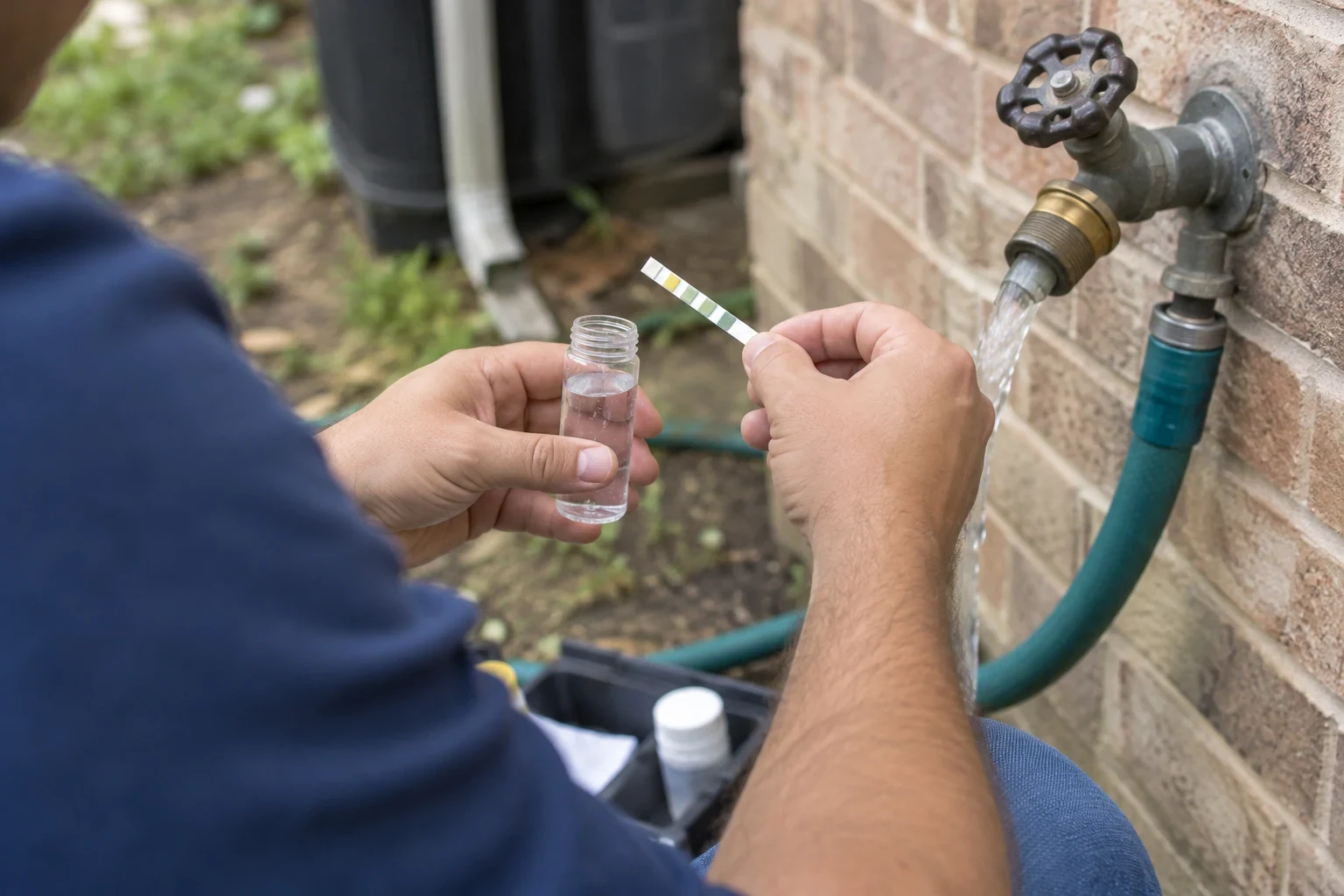
If your house still has original pipes, an RO system adds a layer of protection for the water you drink. Water testing can show what you are dealing with first.
You are buying a lot of bottled water
An RO faucet does the same job without the cases and the trips to the store.
How the visit goes
- 1
We talk on the phone
You describe the problem and what is under the sink today. We ask a few questions so the right parts come with us.
- 2
We look before we sell
At your home we check the filters, membrane, tank and valves. We show you what we found and tell you plainly whether a repair or a new system is the better call.
- 3
We do the work
A drop cloth goes down, the cold line gets shut off and we get to it. Most installs and repairs take a couple of hours, and the rest of the water in your home stays on.
- 4
We flush and test
Fresh filters and a fresh membrane have to be rinsed out before the water is ready to drink. We run that flush, look over every fitting for leaks and confirm the tank fills.
- 5
We leave it clean
Old filters and boxes go out with us. We walk you through a filter change and let you know when the next one is due.
What moves the price
New systems come with free installation, so most of what you pay is the equipment itself. A repair costs whatever the worn parts cost, plus our time. You hear the numbers from us by phone or at your sink before we touch anything.
- Fixing it or starting over
- Swapping filters and a membrane runs well under the price of a new unit. We steer you toward replacement only when housings are cracked, parts are no longer made, or the system is past saving.
- Which system you pick
- A unit with a storage tank and a tankless unit are priced differently. A remineralizing stage or a booster pump adds to the total.
- Your faucet hole and counter
- An open hole in the sink costs nothing extra to use. Going through granite, stone or quartz takes longer and needs a special bit.
- A line to the fridge
- Feeding the refrigerator or ice maker means more tubing and more labor. The farther the fridge sits from the sink, the more that adds.
Reverse osmosis questions we hear
Something not covered here? (713) 528-8226
My RO unit is acting up. Is it worth repairing?
Most of the time it is. Under-sink units are built around standard filters, membranes and valves, so parts are easy to get. We look it over first and give you a straight answer. If a repair would be money down the drain, we tell you why.
How often do the filters need changing?
Plan on the prefilters every six to twelve months, depending on how much water your home goes through. The membrane holds up longer, often a few years. Before we leave, you get a simple change schedule written for your system.
Does RO waste a lot of water?
A share of the water does go down the drain to rinse the membrane. Newer units send less of it than older ones. A shutoff valve that has worn out can make the waste much worse, and that part is a quick swap.
Will RO water taste flat?
Some people notice a difference because the minerals come out along with everything else. A remineralizing stage adds a small amount back so it tastes fuller. We can put one on a new unit or the one you already own.
Will it fit under my sink with the disposal?
In most kitchens, yes. We measure the cabinet and set the tank and housings where they stay out of your way. You should still have room for supplies and easy reach to the filters.
What happens after it is installed?
Our full services after the sale cover that. If you spot a drip or the flow slows down later on, call us and we come back out to take a look.
Get your drinking water sorted out
Tell us what your system is doing, or that you want one put in. We will tell you straight whether it needs parts or a replacement.